Laminate flooring delivers the look of hardwood or tile at a fraction of the cost, but knowing what you’ll actually spend per square foot, material plus labor, can mean the difference between a budget-friendly upgrade and a project that blows past your estimate. In 2026, homeowners pay anywhere from $3 to $13 per square foot installed, depending on material grade, underlayment, subfloor prep, and whether they hire a pro or tackle it themselves. This guide breaks down every cost factor so you can build a realistic budget, avoid surprise add-ons, and decide where to splurge and where to save.
Table of Contents
ToggleKey Takeaways
- Laminate flooring installation costs range from $3 to $13 per square foot installed in 2026, with national averages between $6 and $9 per square foot for material and professional labor combined.
- Material grade matters significantly: budget-grade laminate runs $1–$2 per square foot, mid-grade $2–$4, and premium AC4–AC5 grades cost $4–$5 per square foot with extended durability.
- Professional installation typically costs $2–$6 per square foot depending on region and complexity, while DIY installation saves labor costs but requires tools, skills, and time investment for precise cuts and transitions.
- Hidden costs like subfloor prep ($1–$2.50 per square foot), removal of old flooring ($1–$2 per square foot), underlayment ($0.30–$1.50 per square foot), and transition strips can significantly exceed initial estimates.
- Room layout and size dramatically affect pricing—small rooms under 150 square feet may cost $8–$12 per square foot due to contractor minimums, while large open spaces drop to $2–$3 per square foot labor.
- Strategic cost-saving measures include buying during off-season sales (15–30% discounts), choosing simpler plank layouts over herringbone patterns, and bundling multiple rooms for volume discounts of 5–10% on labor.
Average Cost to Install Laminate Flooring Per Square Foot
As of 2026, the national average for laminate flooring installation sits between $6 and $9 per square foot, including both material and professional labor. Break that down, and you’re looking at roughly $1 to $5 per square foot for the laminate itself, $2 to $6 per square foot for labor, and $0.50 to $1.50 per square foot for underlayment and miscellaneous supplies like transition strips and adhesive.
Costs swing based on geography, urban markets and coastal regions often run 20–30% higher than rural areas, and the complexity of your layout. A simple rectangular living room with no cuts around cabinets or door frames will come in at the lower end. Add in multiple doorways, closets, or a herringbone pattern, and labor ticks up fast.
For a 200-square-foot bedroom, expect a total of $1,200 to $1,800 installed. A 1,000-square-foot main floor runs $6,000 to $9,000. If you’re shopping quotes, pros typically charge by the square foot but may include a minimum trip fee for small jobs under 150 square feet.
Material Costs: Choosing the Right Laminate for Your Budget
Laminate planks are sold in three broad quality tiers, each with a different AC (Abrasion Criteria) rating that measures wear resistance. Budget-grade planks (AC1–AC2) run $1 to $2 per square foot, suitable for bedrooms or closets but not high-traffic zones. Mid-grade (AC3) costs $2 to $4 per square foot and handles family rooms, kitchens, and hallways without premature wear. Premium (AC4–AC5) reaches $4 to $5 per square foot and is rated for commercial use, which translates to decades of durability in a home.
Thickness matters for feel and sound dampening. 8 mm planks are the entry-level standard: 10 mm and 12 mm options feel more solid underfoot, reduce hollow noise, and often include attached underlayment, which saves time and money. Expect to pay $0.30 to $0.50 more per square foot for each millimeter of added thickness.
Click-lock vs. glue-down: Most DIYers pick click-lock (also called floating floor) because it requires no adhesive, installs faster, and can be pulled up and reused. Glue-down laminate costs about the same in material but adds labor time or DIY complexity.
Don’t forget underlayment if your planks don’t come with it attached. Foam runs $0.30 to $0.50 per square foot, cork $0.70 to $1.20, and rubber (best for sound control) $1 to $1.50. Moisture barriers are essential over concrete slabs: many underlayments include a built-in vapor barrier.
Professional Installation vs. DIY: Which Saves More?
Professional installers charge $2 to $6 per square foot depending on region, job complexity, and whether subfloor work is required. A crew can knock out a 500-square-foot room in a day, delivering clean cuts, perfect transitions, and a warranty on labor. If your subfloor is out of level by more than 3/16 inch over 10 feet, the IRC tolerance for floating floors, you’ll pay extra for leveling compound or plywood overlay, typically $1 to $2 per square foot.
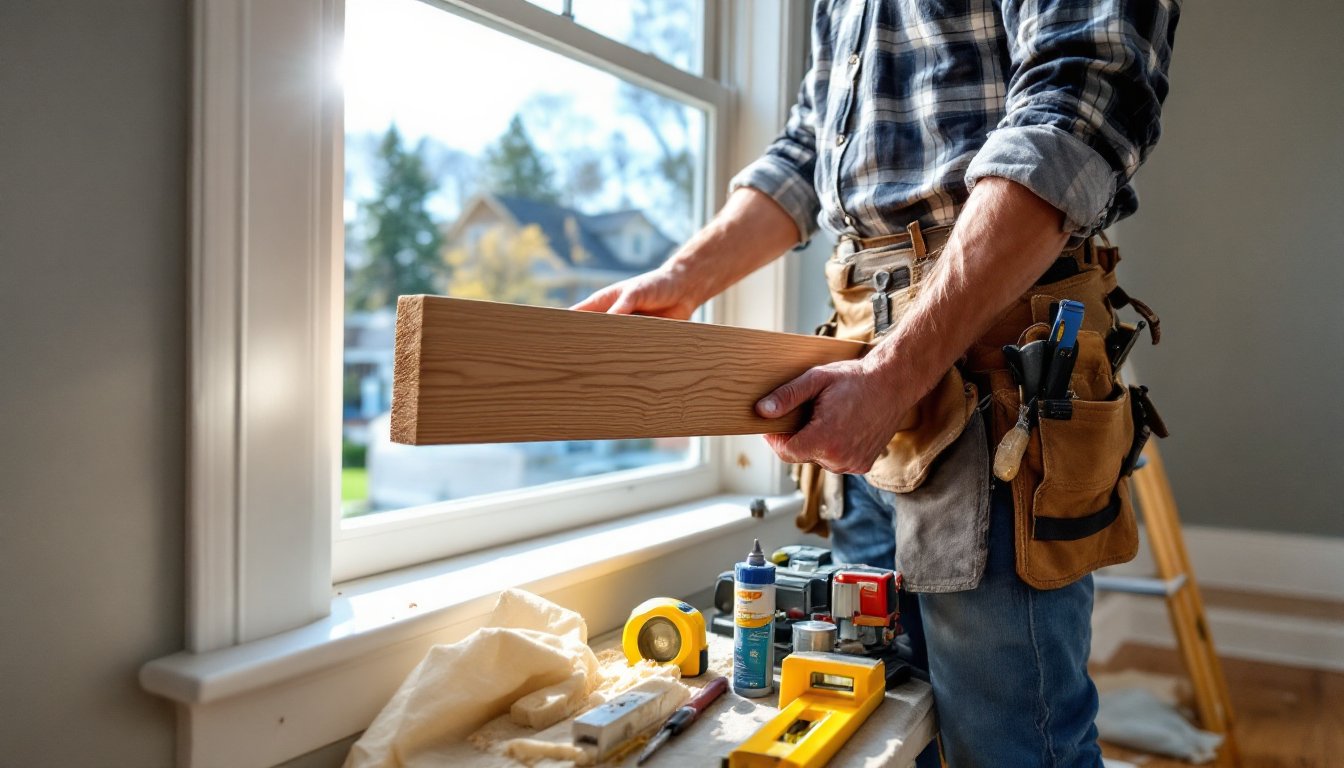
DIY saves the labor cost entirely, but it’s not free. You’ll need a miter saw or circular saw ($100–$300 if you don’t own one), a pull bar and tapping block ($15–$25), a jamb saw ($30–$60), spacers ($5–$10), and a utility knife for underlayment. Budget a full weekend for your first 300-square-foot room, cutting around door casings, scribing planks to walls, and staggering seams takes time.
When to hire a pro:
- Subfloor is uneven, damaged, or needs removal of old flooring like glued-down carpet or tile.
- You’re installing over radiant heat or in a room with complex angles and built-ins.
- You lack the tools or confidence to make precision cuts around door frames and cabinets.
When DIY makes sense:
- Subfloor is clean, dry, and level.
- Room layout is straightforward, few obstacles, standard doorways.
- You have basic carpentry skills and a weekend to spare.
A 200-square-foot bedroom costs $400 to $1,200 in labor: doing it yourself saves that entire line item, though you’ll spend $50 to $100 on consumables and tool rentals if needed.
Hidden Costs That Affect Your Total Installation Budget
Beyond the flooring and labor, several add-ons can push your project over budget if you don’t plan for them upfront.
Subfloor prep: If the existing floor has dips, ridges, or moisture issues, expect to pay for leveling compound ($1 to $2 per square foot), new plywood underlayment ($1.50 to $2.50 per square foot installed), or moisture remediation. Concrete slabs often need a vapor barrier if one isn’t already present.
Removal and disposal: Pulling up old carpet, vinyl, or laminate runs $1 to $2 per square foot in labor, plus disposal fees. Carpet over tack strips is easier: glued-down sheet vinyl or ceramic tile can double removal time.
Transition strips and molding: T-molding for doorways costs $10 to $25 per threshold. Quarter-round or baseboards run $1 to $3 per linear foot installed. If you’re replacing trim, paint or stain adds another $0.50 to $1 per linear foot in finishing costs.
Door trimming: Laminate adds height to the floor, so you’ll need to undercut door casings with a jamb saw. Pros include this in their quote: DIYers need to budget time and a $30 oscillating tool or jamb saw.
Delivery and waste: Most suppliers charge $50 to $150 for delivery on orders over 500 square feet. Add 10% to your square footage for cuts and waste, 15% if your room has angled walls or a diagonal layout.
Material acclimation: Laminate must sit in the room for 48 hours before install to adjust to temperature and humidity. Skipping this step leads to gapping or buckling, especially in climates with big seasonal swings.
Cost-Saving Tips for Laminate Flooring Projects
Buy during off-season sales. Big-box retailers and flooring chains run clearance events in January and July. You can save 15–30% on overstock or discontinued patterns that still carry full warranties.
Skip the bells and whistles where they don’t matter. Save premium AC4–AC5 laminate for high-traffic areas like kitchens and hallways. Use mid-grade AC3 in bedrooms and offices where wear is minimal.
Do your own demo. Pulling up old flooring yourself saves $1 to $2 per square foot in labor. Rent a dumpster for $250 to $400 if you’re doing multiple rooms and haul debris yourself.
Use leftover planks creatively. Order your 10% overage, but don’t return extras. Keep them for future repairs or use them in a closet or small bathroom to stretch your budget.
Bundle your project. If you’re doing multiple rooms, some contractors offer volume discounts, 5–10% off labor when you commit to 800+ square feet. Get three quotes and negotiate.
Choose simpler patterns. Straight plank layout is the most cost-effective. Herringbone, chevron, or diagonal installs increase labor by 20–40% because of the added cuts and precision required.
DIY the trim work. Even if you hire a pro for the main install, handling your own baseboards and quarter-round saves $1 to $3 per linear foot. A miter saw, finishing nails, and caulk are all you need.
How Room Size and Layout Impact Installation Pricing
Square footage drives the base cost, but room configuration can add complexity, and dollars. A wide-open 500-square-foot great room with minimal cuts is faster and cheaper per square foot than a 500-square-foot area broken into three bedrooms with closets and doorways.
Small rooms (under 150 square feet): Many contractors have a minimum charge of $300 to $500 because mobilization, tool setup, and cleanup take the same time whether they’re laying 100 or 300 square feet. Your per-square-foot cost may hit $8 to $12 in a powder room, even with budget laminate.
Medium rooms (150–400 square feet): This is the sweet spot for cost efficiency. Labor averages $2.50 to $4 per square foot, and you can often negotiate a flat rate. According to resources like HomeAdvisor, national averages for standard room installs fall within this range.
Large, open-plan spaces (400+ square feet): Installers move faster with fewer transitions and cuts, so per-square-foot labor may drop to $2 to $3. But, you’ll need more transition strips where laminate meets tile or hardwood in adjacent rooms, and expansions gaps become critical, laminate flooring can only run about 30 feet in one direction without an expansion joint.
Obstacles and angles: Every door casing, floor vent, or cabinet toe-kick requires a custom cut. Rooms with bay windows, angled walls, or built-in shelving can add 10–20% to labor time. Stairs are a different animal entirely, figure $30 to $60 per step for treads, risers, and nosing.
Moisture-prone areas: Installing laminate in basements or laundry rooms may require upgraded moisture barriers or even waterproof laminate (technically WPC or SPC core), which runs $3 to $6 per square foot in material, closer to luxury vinyl pricing.
Conclusion
Laminate flooring remains one of the most cost-effective ways to refresh a home’s look without the commitment of hardwood or tile. By understanding the per-square-foot breakdown, material, labor, underlayment, and hidden prep costs, homeowners can set realistic budgets, compare quotes confidently, and decide where a DIY approach makes sense. Whether you’re covering a single bedroom or an entire main floor, the key is planning for the full scope: subfloor condition, waste factor, and the little expenses like transition strips and door trimming that add up fast. For additional planning resources and contractor insights, check out Angi and ImproveNet to compare local pricing and read verified reviews before you commit.