Replacing windows is one of those projects that can feel intimidating until you understand what you’re actually paying for. The national average hovers around $850 per window for full replacement, but that number swings wildly depending on window type, frame material, labor rates, and whether you’re swapping out a standard double-hung or installing a custom bay window. Homeowners often underestimate the total project cost because they focus on the unit price and forget installation, trim work, and disposal fees. This guide breaks down real-world pricing, the factors that move the needle, and where you can trim costs without cutting corners.
Table of Contents
ToggleKey Takeaways
- The national average window replacement cost is $850 per window, but ranges from $250 for picture windows to $3,500 for bay windows depending on type and materials.
- Double-hung windows are the most budget-friendly option at $300–$600 installed, while casement and sliding windows cost $350–$800 due to their improved energy efficiency and mechanical hardware.
- Frame material significantly impacts pricing: vinyl runs $100–$400, wood costs $200–$600, aluminum ranges $150–$450, and premium fiberglass is $300–$800 per window.
- Professional installation costs $100–$300 per window and covers removal, flashing, insulation, and trim work, while DIY installation is feasible for standard windows in wood-frame homes but risky for structural modifications.
- Replacing multiple windows at once can save 10–20% per window through contractor discounts, and choosing standard sizes over custom options cuts costs significantly.
- Energy-efficient upgrades like triple-pane glass, low-E coatings, and proper installation reduce long-term HVAC costs and boost resale value, making them worthwhile investments despite higher upfront window replacement expenses.
Average Cost to Replace Windows by Type
Window style matters more than most homeowners realize. A standard double-hung window runs $300 to $600 per unit installed, making it the most budget-friendly option for bedroom and living room replacements. These are the workhorses of residential construction, two operable sashes, easy to clean, and straightforward to install.
Casement windows cost $400 to $800 installed. They crank outward and seal tighter than double-hungs, which improves energy efficiency but adds mechanical hardware that bumps the price. If you’re replacing windows on a windy exposure, casements are worth the premium.
Sliding windows fall in the $350 to $700 range. They’re a solid choice for wide openings where a double-hung wouldn’t make sense, think above kitchen sinks or in tight spaces where you can’t swing a casement outward.
Bay and bow windows are the big-ticket items: $1,200 to $3,500 installed. These aren’t simple swaps, they often require structural support, exterior trim work, and interior finishing. If you’re tackling a bay window, budget for a load-bearing header and possible framing modifications. This is not a DIY-friendly project unless you’ve got solid carpentry experience.
Picture windows (non-operable) cost $250 to $600 installed. They’re cheaper because there’s no moving parts, but you lose ventilation. These work well flanked by operable units in a living room or as accent windows in a hallway.
Pricing source data aligns with typical replacement estimates for standard residential projects across the U.S.
Key Factors That Influence Window Replacement Pricing
Several variables control whether you’re paying $300 or $1,200 per window. Understanding these helps you make informed trade-offs.
Size and rough opening dimensions are the first checkpoint. Standard sizes (24″ × 36″, 30″ × 48″, 36″ × 60″) keep costs down because they’re mass-produced and readily stocked. Custom sizes require special orders, longer lead times, and a 20-40% price premium. Measure your rough opening, not the sash, before requesting quotes.
Glazing and glass packages dramatically affect performance and price. Single-pane windows are essentially obsolete unless you’re restoring a historic property. Double-pane (two layers of glass with an air or argon gap) is the current baseline, adding $50 to $150 per window over single-pane. Triple-pane glass boosts insulation and soundproofing but costs $150 to $300 more per unit. If you’re in a cold climate or near a busy road, triple-pane pays off in comfort and resale value.
Low-E coatings (low-emissivity) reduce UV penetration and heat transfer. Expect to add $30 to $75 per window. These coatings are nearly invisible but make a measurable difference in HVAC efficiency, especially on south- and west-facing windows.
Installation complexity varies by wall construction. Replacing windows in a wood-frame house with accessible studs is straightforward. Brick, stone, or stucco exteriors require more careful removal, flashing work, and exterior patching, often adding $100 to $300 per window in labor.
Window Material and Frame Options
Vinyl is the default choice for most residential replacements, running $100 to $400 per window (material only). It’s low-maintenance, energy-efficient, and available in limited colors (mostly white, beige, and gray). Vinyl won’t rot, but it can’t be repainted, and cheaper vinyl frames may warp in extreme heat.
Wood windows cost $200 to $600 per unit. They offer superior aesthetics and can be stained or painted to match any trim. The trade-off: regular maintenance. You’ll need to repaint or restain every 5-7 years and watch for rot around the sill. Wood-clad (wood interior, vinyl or aluminum exterior) splits the difference at $300 to $700, giving you the look inside and weather resistance outside.
Aluminum frames are durable and slim, costing $150 to $450 per window. They’re common in mid-century homes and commercial buildings but conduct heat readily, making them less energy-efficient unless they include a thermal break (an insulating barrier within the frame).
Fiberglass is the premium option at $300 to $800 per window. It’s stronger than vinyl, can be painted, and handles temperature swings without warping. If budget allows, fiberglass is the longest-lasting frame material for harsh climates.
Labor Costs vs. DIY Window Installation
Professional installation typically runs $100 to $300 per window, depending on the contractor’s rate, project size, and window type. That labor charge covers removal of the old unit, prep and shimming of the rough opening, insulation, flashing, interior and exterior trim, and cleanup. Installers working through manufacturers or big-box stores may offer package rates if you’re replacing multiple windows at once.
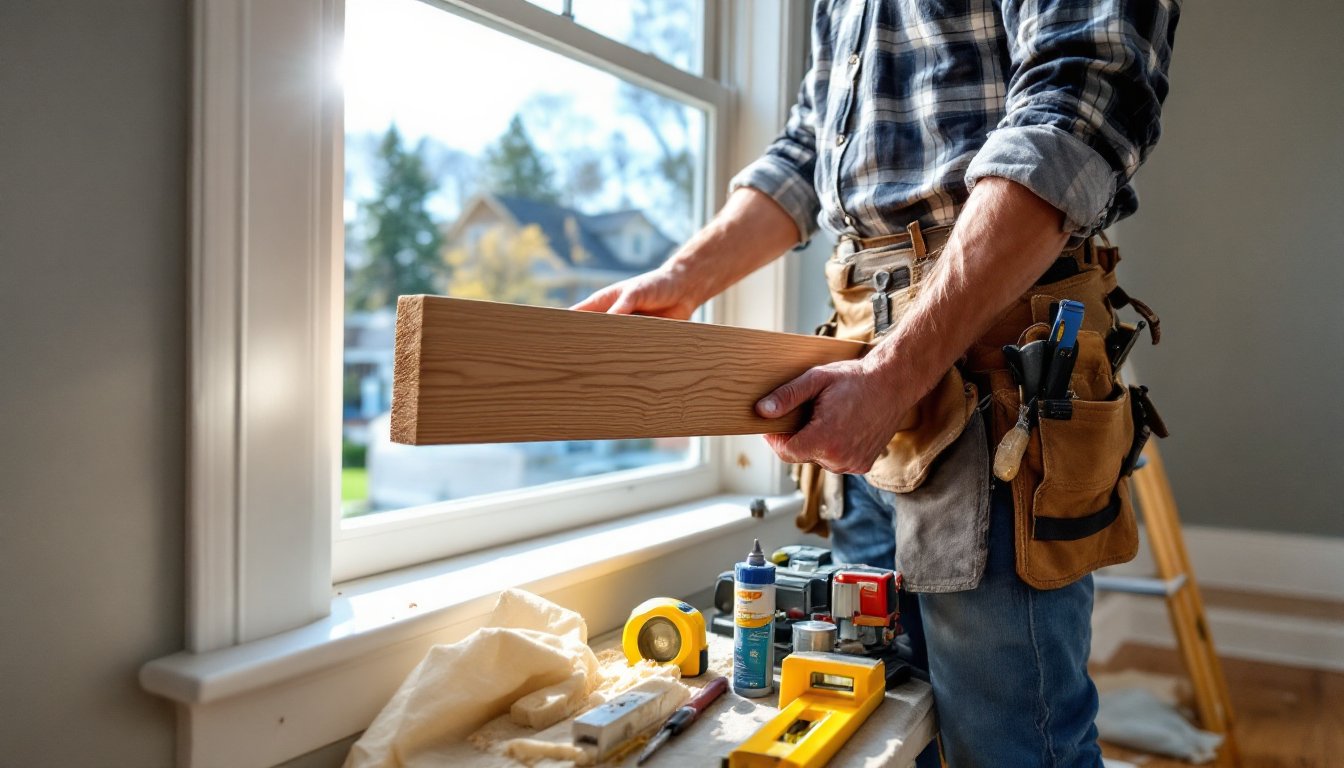
DIY installation is feasible for experienced homeowners tackling standard double-hung or casement windows in wood-frame construction. You’ll need a level, shims, a cordless drill, a utility knife, spray foam insulation, exterior-grade caulk, and a pry bar. A second person is essential, windows are awkward and heavy, and you’ll need help holding the unit in place while shimming and fastening.
Key steps:
- Remove interior stops and sash weights (if applicable).
- Cut through caulk and fasteners holding the old frame.
- Pry out the old unit carefully to avoid damaging the rough opening.
- Check the sill for rot or water damage, replace any compromised framing before installing the new window.
- Apply a continuous bead of sealant to the exterior flange or blind stop.
- Set the new window, level it, and shim at hinge points and corners.
- Fasten through the mounting flanges or blind nailing fins per manufacturer specs.
- Insulate the gaps with low-expansion spray foam, high-expansion foam can bow the frame and prevent smooth operation.
- Install interior trim and exterior caulking.
Permit requirements vary by jurisdiction. Many municipalities require permits for window replacements that alter the rough opening size or affect egress (bedroom windows must meet minimum size and height requirements per IRC Section R310). Check with your local building department before starting. Even if a permit isn’t required, replacing windows in a load-bearing wall or adding a larger opening requires a properly sized header and potentially an engineer’s stamp.
When to hire a pro: Bay windows, structural modifications, brick or stone exteriors, and second-story installations are all better left to licensed contractors. The risk of water intrusion from improper flashing far outweighs the labor savings.
Regional Price Variations and How Location Affects Your Budget
Labor rates swing dramatically by region. Homeowners in New York, San Francisco, and Boston routinely pay $200 to $350 per window for installation, while contractors in the Midwest and Southeast may charge $100 to $175 for the same work. Material costs are more consistent nationwide, but shipping to remote areas can add 10-15% to the project total.
Climate influences material choices, which affects budget. Cold-weather states lean toward triple-pane, low-E glass, and insulated frames, pushing the average replacement cost higher. Coastal areas prioritize impact-resistant glass and corrosion-resistant hardware to meet Florida Building Code or similar hurricane standards, adding $150 to $400 per window.
Permitting and inspection fees also vary. Some jurisdictions charge flat fees ($50-$150 per project), while others calculate fees based on project value. Urban areas with stricter code enforcement may require multiple inspections, adding time and indirect costs.
Many contractors include resources from platforms like Angi to benchmark pricing and gather homeowner reviews, which can help you identify fair market rates in your area.
Ways to Save Money on Your Window Replacement Project
Replace multiple windows at once. Contractors discount labor when they can set up once and work through several units in a single visit. Expect 10-20% savings per window when doing six or more.
Stick to standard sizes. Custom windows cost more and take longer to arrive. Measure your rough openings and choose stock sizes whenever possible. If a window is slightly undersized, you can fur out the opening with dimensional lumber and save hundreds over a custom unit.
Shop during the off-season. Window installers are busiest in spring and early fall. Booking work in late fall or winter often yields better rates and faster scheduling.
Consider insert windows for cosmetic upgrades. If your existing frames are sound, insert (or pocket) windows fit inside the old frame, eliminating tear-out and exterior work. This cuts installation time in half and costs $100 to $200 less per window. The trade-off: you lose about an inch of glass area, and you’re not addressing potential rot in the original frame.
DIY the trim work. If you’re hiring out the window installation, ask if the contractor will leave the interior and exterior trim for you to finish. Trimming windows is straightforward carpentry, miter cuts, caulk, and paint, and doing it yourself can save $50 to $100 per window.
Look for utility rebates. Many states and utility companies offer rebates for energy-efficient window upgrades. Check the Database of State Incentives for Renewables & Efficiency (DSIRE) or your local utility’s website. Rebates range from $25 to $100 per window and sometimes cover up to 30% of the project cost.
Avoid the cheapest quote. Windows are a 20-30 year investment. Hiring an unlicensed installer or choosing bottom-tier vinyl may save money upfront but often leads to callbacks for leaks, drafts, or operational issues. Review contractor references and check licensing status through resources like ImproveNet before committing.
Conclusion
Window replacement costs vary widely, but understanding the drivers, material, size, labor, and location, helps homeowners budget accurately and avoid sticker shock. Whether tackling a DIY install on a few double-hungs or hiring a crew for a whole-house upgrade, focus on quality installation and proper flashing. Cheap windows installed correctly outperform expensive windows installed poorly every time.